For welders, aluminum is one of the most rewarding yet challenging materials to work with. Its light weight and corrosion resistance make it invaluable in industries like aerospace, automotive, and marine, but the real difference lies in whether the alloy is heat-treatable or not. Heat-treated aluminum alloys, including the 2xxx, 6xxx, and 7xxx series, can be dramatically strengthened through controlled heating and cooling. This gives them high performance in demanding environments, but it also means welders must understand how heat input affects the base metal and the heat-affected zone (HAZ).
When welding these alloys, the same heat that makes fusion possible can also undo the very properties that make them strong. Without proper preparation, filler selection, and post-weld treatment, welds may lose strength, crack, or corrode. On the other hand, when handled correctly, heat-treated aluminum delivers welds that are not only lightweight but also durable and reliable enough for critical applications. This is why every welder needs to know how these alloys behave, what risks they present, and which techniques restore or preserve their strength.
What Makes an Alloy Heat-Treatable?
Heat-treatable alloys gain strength through a process called precipitation hardening. During solution heat treatment, the alloy is heated until elements like magnesium, silicon, copper, or zinc dissolve into the aluminum matrix. Quenching then locks these elements in place, creating a supersaturated structure. Controlled aging, either natural or artificial, allows fine precipitates to form, which block dislocation movement and significantly increase strength.
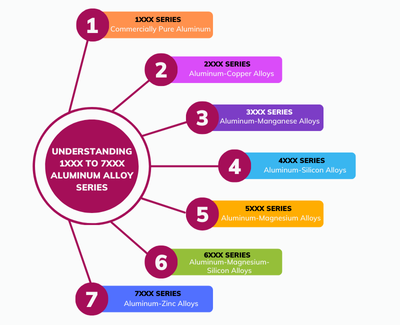
This is different from non-heat-treatable alloys, such as those in the 1xxx, 3xxx, and 5xxx series, which rely on cold working or strain hardening to improve strength. For welders, the key distinction is that heat-treatable alloys can lose strength in the heat-affected zone, but the properties can often be restored with post-weld heat treatment.


Melting Behavior of Heat-Treatable Aluminum Alloys
Understanding how aluminum melts is crucial for welding success. Unlike steel, which has a sharp melting point, aluminum alloys have a melting range. Pure aluminum melts at about 1220°F (660°C), but heat-treatable alloys, especially those in the 2xxx and 7xxx series, may begin softening as low as 950°F (510°C) and fully melt closer to 1180°F (640°C).
This wide melting range creates unique challenges for welders. Aluminum’s oxide layer, which melts at about 3700°F (2037°C), acts as a barrier to fusion and must be removed before welding. The presence of copper or zinc in some alloys increases the risk of hot cracking, since these elements tend to segregate during solidification. The weld pool is also very fluid compared to steel, which makes torch control, travel speed, and proper joint fit-up especially critical.
For welders, understanding these melting characteristics means adjusting technique. Controlling heat input, removing oxides, and selecting the right filler metal are all essential for preventing brittle welds and ensuring reliable results.
The Major Heat-Treatable Alloy Series
The 2xxx series (Al-Cu) uses copper as the primary alloying element. These alloys are very strong but have poor corrosion resistance and are prone to hot cracking. They are widely used in aerospace where strength is critical, but welding them is challenging. Special fillers and post-weld heat treatment are often required.
The 6xxx series (Al-Mg-Si), including the popular 6061, is one of the most versatile aluminum families. It offers a good balance of strength, corrosion resistance, and weldability. These alloys are commonly welded using TIG or MIG, and fillers such as ER4043 or ER5356 help manage cracking while maintaining performance.
The 7xxx series (Al-Zn-Mg-Cu) delivers the highest strength of any aluminum alloys, thanks to zinc and copper additions. They are used in aerospace, defense, and sporting goods. However, their weldability is poor, as they are highly prone to cracking. Advanced processes like friction stir welding are often required to achieve reliable joint

Benefits of Welding Heat-Treated Aluminum Alloys
The greatest advantage of heat-treated aluminum alloys is their ability to deliver superior strength compared to non-heat-treatable grades. When subjected to processes like solution heat treatment and aging, these alloys develop a fine, hardened microstructure that dramatically increases tensile strength. After welding, post-weld heat treatment can restore much of the strength lost in the heat-affected zone, making joints nearly as strong as the original base material. This is critical in industries like aerospace and automotive, where every component must carry high loads without adding unnecessary weight.
Wear resistance is another benefit. Heat-treated alloys are tougher and more resilient against friction, stress, and vibration. For welders working on high-performance structures such as automotive suspension systems, aircraft parts, or offshore platforms, the added durability ensures the finished weld can withstand extreme service conditions.
Corrosion resistance is equally important. While welding always alters the local structure of aluminum, using the correct filler metal and heat treatment helps maintain corrosion resistance in the weld zone. This makes heat-treated alloys highly suitable for marine and outdoor environments, where exposure to saltwater or harsh weather could otherwise shorten a structure’s lifespan.
Another benefit is design flexibility. Welding heat-treated aluminum alloys allows engineers and fabricators to create strong, lightweight assemblies that would be impossible with fasteners alone. Large frames, battery enclosures, and aerospace structures rely on welding to achieve both strength and reduced weight. In industries where every pound matters, the ability to weld these alloys gives designers more freedom without compromising safety.
Heat-treated alloys also support repair and restoration. Welders can restore damaged parts such as aircraft frames or heavy equipment components using proper welding techniques followed by post-weld treatments. This extends service life, reduces costs, and keeps critical equipment in operation.

Challenges Welders Face
Despite their advantages, heat-treatable aluminum alloys are not easy to weld. The most common issue is strength loss in the heat-affected zone, since the welding heat disrupts the hardened microstructure. Hot cracking is another major challenge, particularly with 2xxx and 7xxx alloys, because the copper and zinc content make them more vulnerable during solidification. If filler metals are not carefully matched to the base alloy, corrosion can also occur at the joint, reducing durability. Finally, aluminum’s high thermal conductivity makes heat management difficult. Too much heat can cause distortion or sagging, while too little heat results in poor fusion.
What Welders Should Do Before Welding
Even with the benefits, welding heat-treated aluminum alloys requires careful preparation and discipline. The first step is to identify the alloy. Not all aluminum alloys respond to heat treatment, so welders need to confirm whether they are working with a 2xxx, 6xxx, or 7xxx series alloy and then select the correct filler metal. For example, 6061 aluminum is often paired with ER4043 or ER5356 filler rods, while high-strength 7xxx alloys may demand more specialized solutions.
Surface cleaning is just as critical. Aluminum forms a stubborn oxide layer that melts at a much higher temperature than the base metal. If this oxide is not removed, fusion will be inconsistent and weak. Welders should brush the joint with a stainless steel brush reserved only for aluminum, and clean it with acetone or another approved solvent. Any trace of oil, dirt, or moisture can introduce hydrogen into the weld pool, leading to porosity and weak spots.
Proper joint design also plays a role in weld quality. Aluminum expands and contracts significantly under heat, so the fit-up must be tight and correctly designed to minimize stress and distortion. Loose or poorly designed joints increase the risk of incomplete fusion or cracking once the weld cools.
Environmental control is equally important. Shielding gas must be set up properly to protect the weld pool. Pure argon is commonly used, and welders should confirm the flow is steady with no drafts or leaks. Oxygen contamination leads to porosity and oxidation, which weaken the joint. Equipment should always be inspected before welding begins to prevent unnecessary interruptions.
Finally, preheating can make a significant difference. For thicker aluminum sections, preheating to around 150–200°F stabilizes the weld pool and reduces the likelihood of cracking. However, care must be taken not to overheat, as excessive preheating can weaken the alloy and harm its corrosion resistance.
By following these steps, welders create the right conditions for clean, strong welds that take full advantage of what heat-treated aluminum alloys have to offer. Preparation is just as important as technique, and welders who respect these details consistently achieve better results.