Aluminum is one of the most versatile metals in fabrication, used in everything from food packaging to aerospace engineering. What makes it so adaptable is its ability to be alloyed with different elements, producing unique families of aluminum known as alloy series. Each series has its own strengths, weaknesses, and welding characteristics. For welders, understanding the differences between the 1xxx to 7xxx series is essential to selecting the right process, filler metal, and preparation method.
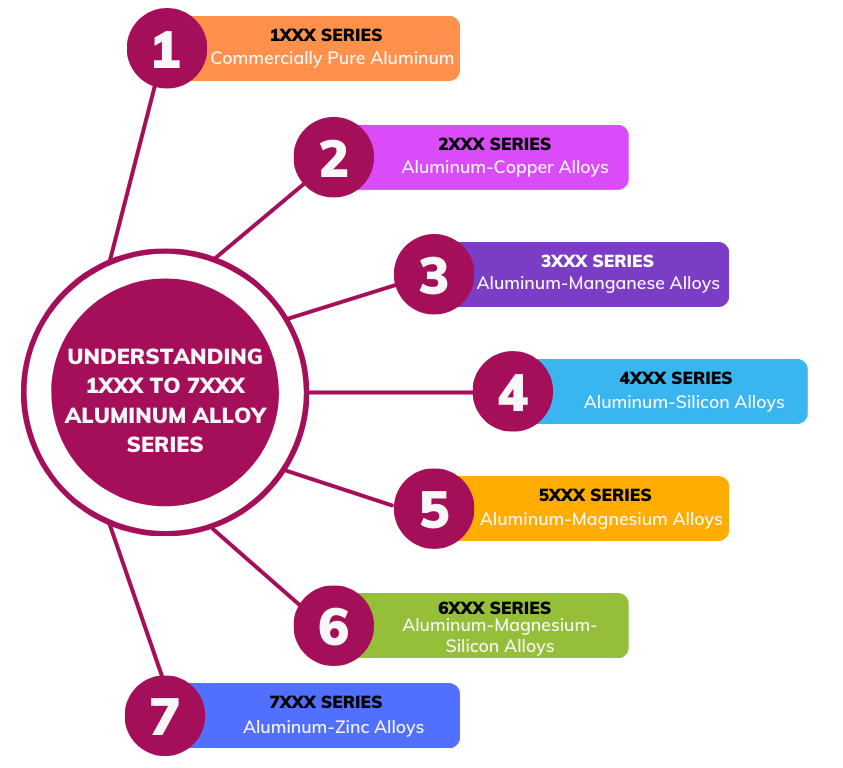
1xxx Series: Commercially Pure Aluminum
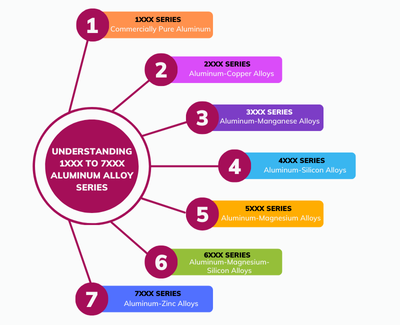
The 1xxx series contains 99% or more aluminum. It is soft, highly ductile, and extremely corrosion resistant. While not as strong as other alloys, it welds easily and is often used where conductivity and corrosion resistance are more important than strength. Typical applications include chemical equipment, roofing, and electrical bus bars.
2xxx Series: Aluminum-Copper Alloys
The 2xxx series is alloyed mainly with copper, which gives it high strength but poor corrosion resistance. These alloys are widely used in aerospace and automotive industries where strength is critical. However, they are difficult to weld and prone to hot cracking. Special fillers and heat treatments are usually required to achieve acceptable results.
3xxx Series: Aluminum-Manganese Alloys
The 3xxx series is known for excellent corrosion resistance and good workability, though it offers only moderate strength. These alloys are commonly used in roofing, siding, beverage cans, and chemical equipment. Welding is generally straightforward, and filler metals such as 4045 or 5356 are commonly paired with these alloys.
4xxx Series: Aluminum-Silicon Alloys
Containing significant amounts of silicon, the 4xxx series offers improved wear resistance and lower thermal expansion. These alloys are often used in automotive and engine components. In welding, they are sometimes chosen as filler material themselves because their silicon content reduces cracking.
5xxx Series: Aluminum-Magnesium Alloys
The 5xxx series is one of the most important families for welders. Strong, highly corrosion resistant, and very weldable, these alloys are widely used in marine, transportation, and structural applications. They respond well to processes like MIG and TIG, and fillers such as ER5356 or ER5183 are frequently used to maximize strength and corrosion resistance.
6xxx Series: Aluminum-Magnesium-Silicon Alloys
The 6xxx series is versatile and widely used in construction, aerospace, and automotive manufacturing. These alloys strike a balance between strength, corrosion resistance, and weldability. 6061, one of the most common grades, is often welded with fillers such as ER4043 for crack resistance or ER5356 for strength. Welders must manage heat carefully to avoid distortion or loss of properties.
7xxx Series: Aluminum-Zinc Alloys
The 7xxx series delivers some of the highest strength levels among aluminum alloys, thanks to zinc and copper additions. They are used in aerospace, defense, and high-performance sporting goods. However, their poor weldability makes them challenging. These alloys are prone to cracking and usually avoided in welded structures unless advanced methods like friction stir welding are used.
Final Thoughts
From the pure aluminum of the 1xxx series to the ultra-strong but difficult 7xxx series, each family of alloys presents unique opportunities and challenges. For welders, knowing how these alloys behave under heat, which fillers to use, and when to apply advanced processes is key to producing durable, high-quality joints. By understanding the full spectrum of 1xxx to 7xxx alloys, fabricators can approach aluminum welding with greater confidence and skill.