Aluminum is the material of tomorrow. Its light weight, strength, and recyclability make it indispensable across the aerospace, automotive, and renewable energy sectors. Yet, welding this versatile metal has always presented a unique set of challenges, from the stubborn oxide layer to its high thermal conductivity. The future of aluminum welding is not about reinventing the arc but about a revolution in technology that makes the process smarter, faster, and, most importantly, flawless.This evolution is driven by three core pillars: automation, advanced processes, and the integration of digital technology.
The Rise of Smart Automation
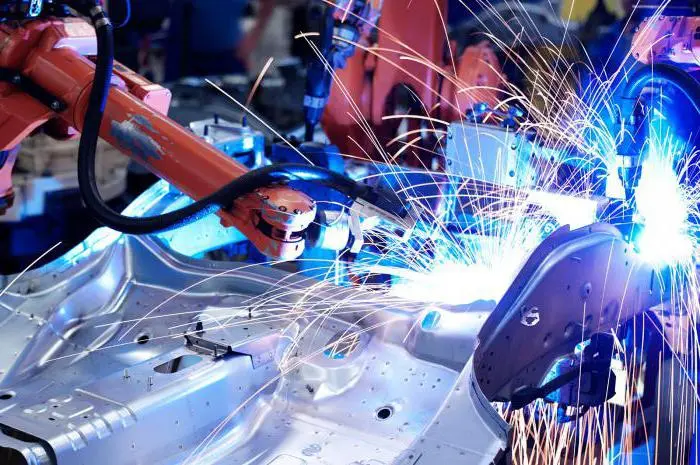
The welding robot has been around for decades, but its role is changing. No longer just a programmed machine, the next generation of welding systems is equipped with a new kind of intelligence. AI-powered vision systems, for example, are a game-changer. Cameras and sensors in the welding head can now see the weld pool in real-time, detecting even minute inconsistencies. These systems can instantly adjust parameters like travel speed and voltage, ensuring a perfect, consistent weld bead and eliminating defects like porosity before they even form. This technology reduces reliance on a human operators manual corrections, bringing a new level of quality control to high-volume production.
Furthermore, collaborative robots, or cobots, are redefining the human-machine relationship on the factory floor. The welder of the future will not be replaced by a robot; they will work alongside one. Cobots are designed to be safe to operate near humans, handling repetitive and physically demanding tasks. This allows skilled welders to focus on the more intricate, complex welds that require their expertise, boosting overall productivity and addressing the industrys persistent labor shortages.
Beyond the Arc: New Processes for Perfect Welds
While TIG and MIG remain foundational, groundbreaking new methods are emerging that bypass traditional melting and fusion to achieve superior results. Friction Stir Welding FSW is a prime example. It is a solid-state process that joins metal without melting it. A non-consumable, rotating tool creates friction, heating the aluminum to a soft, malleable state. The tool then “stirs” the two pieces together, forming a homogeneous, high-strength bond. Because there is no molten metal, common defects like porosity and hot cracking are virtually eliminated. FSW is producing stronger, more fatigue-resistant joints, making it a critical technology for aerospace and high-performance automotive applications.
Another significant innovation is Hybrid Welding. This technique combines the best of two worlds, typically a laser and an arc welding process. The laser provides a deep, focused beam that penetrates the material, while the arc adds filler material and fills gaps. This combination allows for a faster, more stable weld with less heat input, reducing distortion and improving joint fit-up tolerance. It is a powerful solution for industries that require both speed and precision. Handheld laser welders are also making an impact by offering a portable, precise, and fast alternative for on-site repairs and small-scale fabrication.

The Digital Transformation of the Welder
The skill of the welder is evolving from a physical craft to a technical one. Training the next generation is becoming more efficient and cost-effective with augmented reality AR and virtual reality VR simulators. These systems provide a risk-free environment for students to practice and perfect their technique. They offer real-time feedback on travel speed, angle, and distance, allowing welders to build muscle memory and skill much faster than with traditional methods, all while reducing material waste.
Modern welding machines are becoming “smart” tools that collect and analyze data. This allows supervisors to monitor weld quality, identify potential issues, and optimize parameters remotely. The data can be used to track consistency, predict equipment maintenance needs, and provide welders with insights to improve their performance. The welder of the future will be less of a manual laborer and more of a highly skilled technician who operates, programs, and troubleshoots these advanced welding systems.
The future of aluminum welding is not a single technology but a holistic ecosystem of innovation. By embracing these advancements, the industry can create stronger, more reliable, and visually perfect welds, opening up new possibilities for aluminum in every sector.